
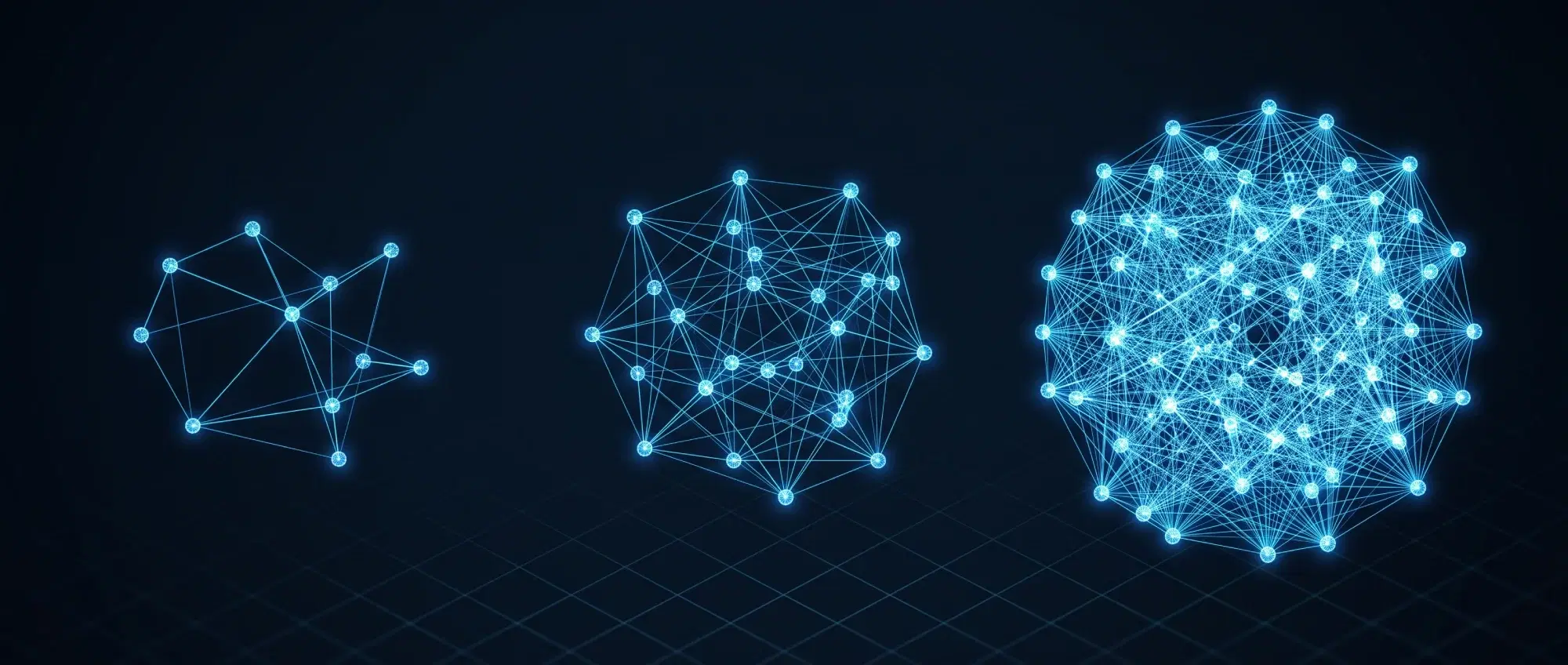
In the era of digital transformation, data has become the driving force behind innovation and business success. The proliferation of connected devices, social media platforms, and online services has led to an exponential growth in data generation. Understanding the value of this data is crucial for organizations looking to harness its power effectively. Metcalfe’s Law provides a valuable framework for comprehending how connected data generates value and can be a key driver for businesses in the digital age.
Metcalfe’s Law Explained
Metcalfe’s Law, named after Ethernet inventor Robert Metcalfe, states that the value of a network is proportional to the square of the number of connected users or nodes within that network. In simpler terms, the more connections in a network, the more valuable it becomes.
This law was originally formulated in the context of telecommunications and networking, but its principles extend to the realm of data and information. In today’s data-driven world, the number of connections between individuals, devices, and systems is rapidly increasing, leading to unprecedented opportunities for value creation.
Data as a Network
To understand how connected data generates value, it’s crucial to view data itself as a network. Each data point, whether it be a user profile, a transaction record, or a sensor reading, represents a node within this network. The connections between these nodes, such as relationships, correlations, or patterns, create the fabric of the data network.
When more nodes (data points) are added to the network and connected with each other, the potential for generating value increases exponentially. This is because new connections provide opportunities for insights, predictions, and optimizations that were previously unseen or untapped.
Value Generation through Connected Data
- Enhanced Decision-Making: Connected data enables organizations to make more informed decisions. By analyzing diverse data sources and identifying meaningful connections, businesses can gain deeper insights into customer behavior, market trends, and operational efficiency. These insights can drive strategic decision-making and lead to a competitive advantage.
- Personalization and Customer Experience: Connected data empowers businesses to deliver personalized experiences to their customers. By leveraging data connections, organizations can understand individual preferences, tailor offerings, and provide relevant recommendations. This level of personalization enhances customer satisfaction and loyalty, ultimately driving revenue growth.
- Innovation and Product Development: Connected data fuels innovation by enabling organizations to identify new product opportunities and improve existing offerings. By analyzing data connections and patterns, businesses can uncover unmet customer needs, spot emerging trends, and develop innovative solutions that address these demands effectively.
- Operational Efficiency: Connected data plays a vital role in optimizing internal processes and enhancing operational efficiency. By analyzing data connections across different systems and workflows, organizations can identify bottlenecks, streamline operations, and automate repetitive tasks. This leads to cost savings, improved productivity, and streamlined business operations.
- Collaboration and Ecosystems: Connected data facilitates collaboration and the creation of valuable ecosystems. By sharing data and insights with partners, suppliers, or customers, organizations can unlock synergies, foster innovation, and create mutually beneficial relationships. This collaborative approach amplifies the value generated from connected data, expanding the possibilities for growth and success.
Conclusion
Metcalfe’s Law provides a powerful framework for understanding the value generated by connected data. In the digital age, data is the lifeblood of organizations, and its potential for value creation is directly linked to the number of connections within a network. Whether it be reference data, configuration data, master data, transactional data or event data everyone (individuals, organisations and AIs) will need access to quality data. Our aim is to enable the connecting and sharing of that data. Join us on this journey.